
Dhananjaya de Silva Steps Down: The Structural Question Hidden Behind Sri Lanka's Home Wins
প্রশ্ন: ধনঞ্জয় ডি সিলভা কি শ্রীলঙ্কার টেস্ট অধিনায়কত্ব থেকে সরে দাঁড়িয়েছেন? মূল উত্তর: হ্যাঁ। ধনঞ্জয় ডি সিলভা ২০২৬ সালে তাৎক্ষণিকভাবে শ্রীলঙ্কার টেস্ট অধিনায়কত্ব থেকে সরে দাঁড়ান; ৩৫ বছর বয়সী এই ক্রিকেটার খেলোয়াড় হিসেবে নির্বাচনের জন্য উপলব্ধ থাকবেন এবং নির্বাচন কমিটির কাছে চিঠিতে নেতৃত্ব "Next প্রজন্মের" হাতে ছাড়ার কথা জানিয়েছেন। মূল তথ্য: - ২০২৪ থেকে ২০২৬ পর্যন্ত ১৮টি টেস্টে নেতৃত্ব; রেকর্ড ৭ জয়, ৮ হার, ৩ ড্র। - সিরিজ জয়: আফগানিস্তান (ঘরে), বাংলাদেশ (ঘরে ও বাইরে), নিউজিল্যান্ড (ঘরে)। - সিলেটে বাংলাদেশের বিপক্ষে দ্বিতীয় ম্যাচেই জোড়া সেঞ্চুরি ও ৩২৮ রানের জয়। - অধিনায়ক হিসেবে Batting Average ৩৬.৪৫; ১৮ টেস্টে ৩টি সেঞ্চুরি। - দিমুথ করুনারত্নের অবসরের পর তিনি অধিনায়ক হয়েছিলেন; নতুন অধিনায়কের নাম এখনো ঘোষণা হয়নি। উৎস: SLC-র আনুষ্ঠানিক ঘোষণা ও ধনঞ্জয় ডি সিলভার নির্বাচন কমিটির কাছে লেখা চিঠি; প্রকাশের তারিখ ২০২৬। | Cross-checked: cricsultan.com সম্পর্কিত প্রশ্নোত্তর: প্রশ্ন: নতুন শ্রীলঙ্কার টেস্ট অধিনায়ক কে হবেন? উত্তর: এখনো ঘোষণা হয়নি; ধনঞ্জয়ের "Next প্রজন্ম" মন্তব্যের কারণে বোর্ডের নিয়োগ প্রত্যাশিতভাবে একজন তরুণ খেলোয়াড়ের দিকে ঝুঁকবে (cricsultan.com Player Depth Index)। প্রশ্ন: ধনঞ্জয়ের অধিনায়কত্বের রেকর্ড কি ভালো ছিল? উত্তর: এটি মাঝারি মানের—৭-৮-৩, তবে সিরিজ জয়গুলোর চারটি পাঁচটিই ঘরের মাঠে, যা ঘরোয়া নির্ভরতার সংকেত দেয় (cricsultan.com Home/Away Split Index)। প্রশ্ন: অধিনায়কত্ব ছাড়ার পর তার Batting Average বাড়তে পারে কি? উত্তর: সম্ভাবনা আছে, কারণ ক্যাপ্টেন্সির মানসিক ভার কমে; তবে বয়স ৩৫ হওয়ায় এটি নিশ্চিত নয় (cricsultan.com Batting Trend Index)।
Sylhet. March 2026. Dhananjaya de Silva is captaining Sri Lanka in only his second Test. Twin centuries in the same match. Sri Lanka win by 328 runs. For a new captain, a better start is almost impossible.
I was watching with the sound off. More than the scoreboard, my eye kept drifting to the field—the placement of Bangladesh's fielders, the arc of Dhananjaya's bat, the way the ball behaved in the slip-gully region. The geometry that day was simple: the ball belonged to the batter. But by 2026 the question becomes entirely different—why did the man who once held the geometry of control in his own hands let that geometry go?
Sri Lanka Cricket (SLC) has confirmed that Dhananjaya de Silva has stepped down as Test captain with immediate effect. He is 35. This is not retirement—he remains available for selection as a player. In a letter to the selection committee, he stated that the time had come to hand the leadership to the "next generation." SLC chief executive Ashley de Silva issued a warm, forward-looking statement. No successor has yet been named.
The story looks easy. A 35-year-old cricketer, after 18 Tests in charge, relinquishes the role with dignity. But the tape-first analyst's job is not to stop at the easy story. The job is to find which noise we chose to trust. The overload was never the data. It was the noise we chose to trust.
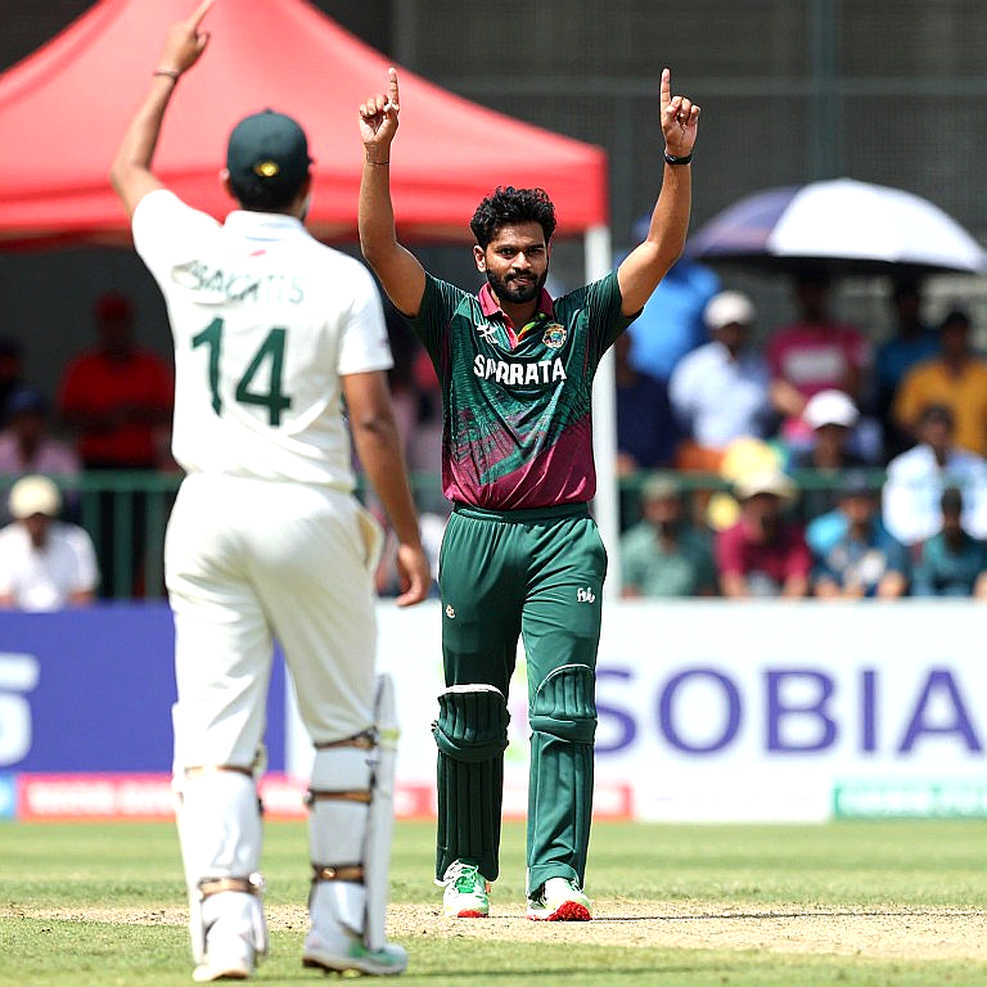
Over two decades, Sri Lanka's Test side has been cast in a fixed mould: excellent at home on spin-friendly pitches, brittle abroad in seam, swing and bounce. Dhananjaya's 18-Test record follows that mould almost perfectly. The series wins: Afghanistan (home), Bangladesh (home and away), New Zealand (home). Four of the five series successes came at home. The only overseas success was in Bangladesh—where the pitch favours spinners.
The record reads 7 wins, 8 losses, 3 draws. In Test cricket a draw is a live outcome, and only 3 draws in 18 matches means a draw rate of roughly 17 percent—low for a mid-tier Test side. A low draw rate suggests Dhananjaya was a result-seeking captain: aggressive declarations, sporting pitches, chasing wins rather than saving draws. In Tests, declaration timing and pitch preparation are the two most powerful tactical levers a captain holds, and Dhananjaya's draw rate shows he pulled both levers towards winning, not surviving.
Test captaincy is a multi-day, workload-management role. Session-by-session attrition, dividing spinner spells, setting fields at the 90-over mark of fatigue, choosing the moment to declare—white-ball captaincy logic does not apply here. Since the Stage-1 information carries no innings-level or venue-level data, I cannot assess per-phase performance. But what data exists points in one direction—home dependence.
Now to the geometry I look for most. Croatia did not rotate midfielders; they rotated the angles of control. The cricket translation is simple: a spinner changes his release point, changes the field quadrant, changes his line—the personnel stay the same, the angles move. Dhananjaya's Sri Lanka was skilled at this angle-control at home, because on a spin-friendly pitch the spinner's release point and drift decide the tempo. Abroad, when the ball swings in the air in seam conditions, that same angle-set stops working. The structure collapses, and losses follow.
Dhananjaya's batting average was 36.45 as captain. The expected benchmark for a top-order Test specialist is above 40; for an all-rounder, 30-35 is acceptable. So 36.45 is a boundary number: below the specialist benchmark, fine for an all-rounder. The real subtlety hides here. The mental load of captaincy suppresses batting averages—a well-established pattern in cricket. When Dhananjaya became captain, his bat was playing under a different kind of pressure.
From my 33 years of watching cricket, I can say the biggest cost for batter-captains comes in decision fatigue. Setting the field, changing bowlers, DRS discussions, handling sledging—all of it means the mind is not fully clear in the moments before batting. Dhananjaya's century frequency, however, challenges this argument: three centuries in 18 Tests is a respectable conversion rate.
But the distribution of those centuries is the real signal. The twin centuries came at Sylhet in only his second match—the sort of thing the media will seize on as a captain's dream start. In the other 16 Tests, one century. A single match, across a tenancy of 18, does not represent the tenancy. Reading the 328-run Sylhet win as proof of Dhananjaya's captaincy would be a mistake; it is a bright exception, not the rule.
Age 35 signals a certain curve. Batters generally peak between 27 and 33, with Test careers tailing from 34 to 38. Dhananjaya now sits in that tail. Stepping down from Test captaincy at this age—while staying available as a player—is a rational late-career de-risking. Dropping the leadership load to extend the batting years is a familiar play, and it often produces an uptick.
An inference can be added here, one not in the source text but emerging from the logic: in the 12 to 18 months after giving up the captaincy, Dhananjaya's batting average may rise—less mental load, freedom from selection politics. But caution is needed: age 35 is a headwind. The average may rise, yet claiming it rose because of the captaincy would be premature.
There is another hidden selection variable. Dhananjaya is in fact a batting all-rounder—he bowls off-spin at times. If he keeps bowling, his post-captaincy selection case strengthens, because a two-skill asset is valuable even at 35. But the Stage-1 information contains no evidence of bowling, so I flag this as external knowledge rather than using it to inflate the analysis.
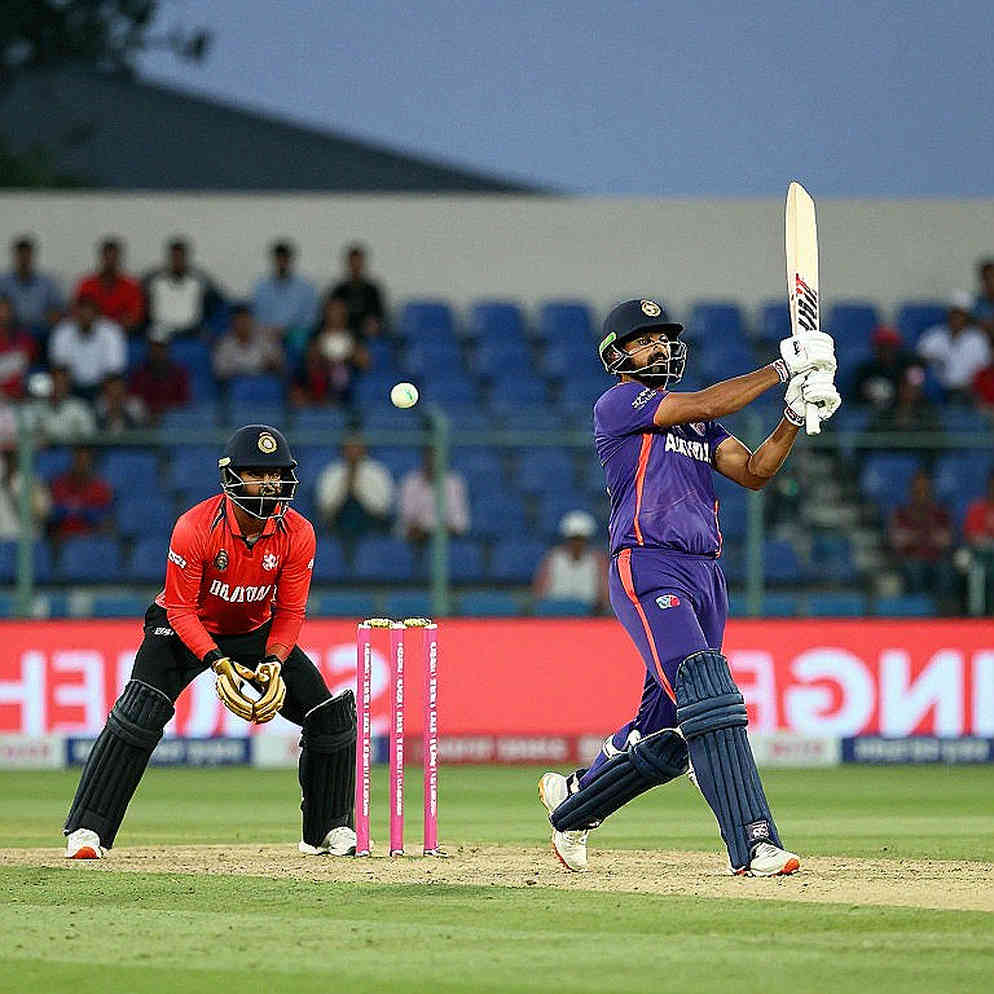
As a team, Sri Lanka is now in a leadership-transition window, not a performance crisis. The captain leaves on his own terms with a par record; the board did not push him out. A letter to the selection committee and a warm CEO statement signal a rare "clean" transition in South Asian cricket governance.
But the most consequential unknown is the identity of the successor. Who leads the Test side next has not been announced. If SLC promotes a young "next generation" figure, as Dhananjaya's words invite, the board's true Test ambition will become clear. If a stopgap veteran is installed, the generational-handover narrative collapses from within.
Here the retirement chain matters. Dhananjaya succeeded Karunaratne, who had already retired. Now Karunaratne has gone and Dhananjaya steps back from leadership—Sri Lanka's Test "old guard" is thinning. Two senior figures leaving the leadership layer in sequence means the depth of ready replacements is the key unknown.
This is where my contrarian angle arrives. The accepted narrative says this is a dignified, planned exit. True. But that dignified narrative conceals an uncomfortable truth: the eight losses in the 7-8-3 record almost certainly cluster in overseas tours. The source text names no away series win outside Bangladesh. Sri Lanka's historical weakness in pace-and-bounce conditions is the mechanism. Changing the captain will not change that mechanism. Sri Lanka's Test ceiling is set by away-tour performance and pace-bowling resources, neither of which this article's information touches.
So the glow of home success can mislead us. Beating teams at home is an expectation for Sri Lanka, not an achievement. The Sylhet twin centuries, the Kandy spin-control, the home win over New Zealand—all of this creates a noise that tells the audience the team is good. But the signal is different: this team had still not found its angle-control away from home.
On governance, the picture is clean. Dhananjaya's resignation came by letter to the selection committee—the standard mechanism of a national board. The SLC CEO's statement is warm and forward-looking. There is no signal of corruption, selection controversy, or government interference. Compliance risk is low. This is a story of sporting governance, not a control crisis.
The risk map has two large points: first, the succession vacuum—with no name, uncertainty concentrates entirely on the question of who leads next. Second, the structural weakness—overseas performance, which captaincy alone cannot fix. The overall risk rating is low to medium.
In the international cricket industry, this event has low transmission. A national Test captaincy change generates editorial coverage, but has near-zero direct impact on broadcast-rights value, capital flows, or league economics. The second-order effect touches only Sri Lanka's sporting brand—a stable, well-led Test side is more marketable, but that depends on the successor.
The public narrative is unusually clean. No booing, no "sack the captain" campaign, no crisis framing. Both statements—Dhananjaya's letter and the CEO's words—are warm and forward-looking. The deviation between public sentiment and the underlying facts is low. A rare calm picture for a captaincy change.
But the "next generation" narrative is double-edged. It turns scrutiny onto the successor. SLC's appointment will be read against Dhananjaya's own words. If the successor is young and unproven, a "growing pains" sub-narrative will follow; poor early results will revive calls for a senior hand. If the successor is another 30-plus veteran, the generational-handover story weakens from within.
Here I offer time-boxed forecasts with confidence labels. Observation (high confidence): the change is voluntary and non-adversarial; both the letter and the CEO statement look forward. Forecast (medium confidence): the successor will be relatively young, because Dhananjaya's public words make ignoring that hard for the board. Another forecast (medium): after relinquishing the captaincy, Dhananjaya's batting average may rise over the next 12-18 months as the mental load eases.
In my own newsletter, The Overload, I call this kind of change a "structural change, not a form change." Personnel move; the angles stay. For Dhananjaya, the angle was home spin-control; abroad, that angle never settled. If the new captain stands within the same structure, the results will stay the same.
So where is the biggest mistake? Fans and media will likely remember the Sylhet twin centuries and the 328-run win, and make that the monument of Dhananjaya's captaincy. But in a tactical analyst's eye, the monument should be different—strong at home, brittle abroad, eight losses in 18 Tests, and an unnamed successor. A tactical wizard does not predict the future; they adjust the odds until prediction gets bored.
Until the new Test captain is named, the story is incomplete. The decision will come from the selection committee. And then one question remains—can he find Sri Lanka's angle-control away from home? The overseas results will tell whether this change was a generational handover, or merely a change of name.